Ways to Lower Lease Costs in Canada
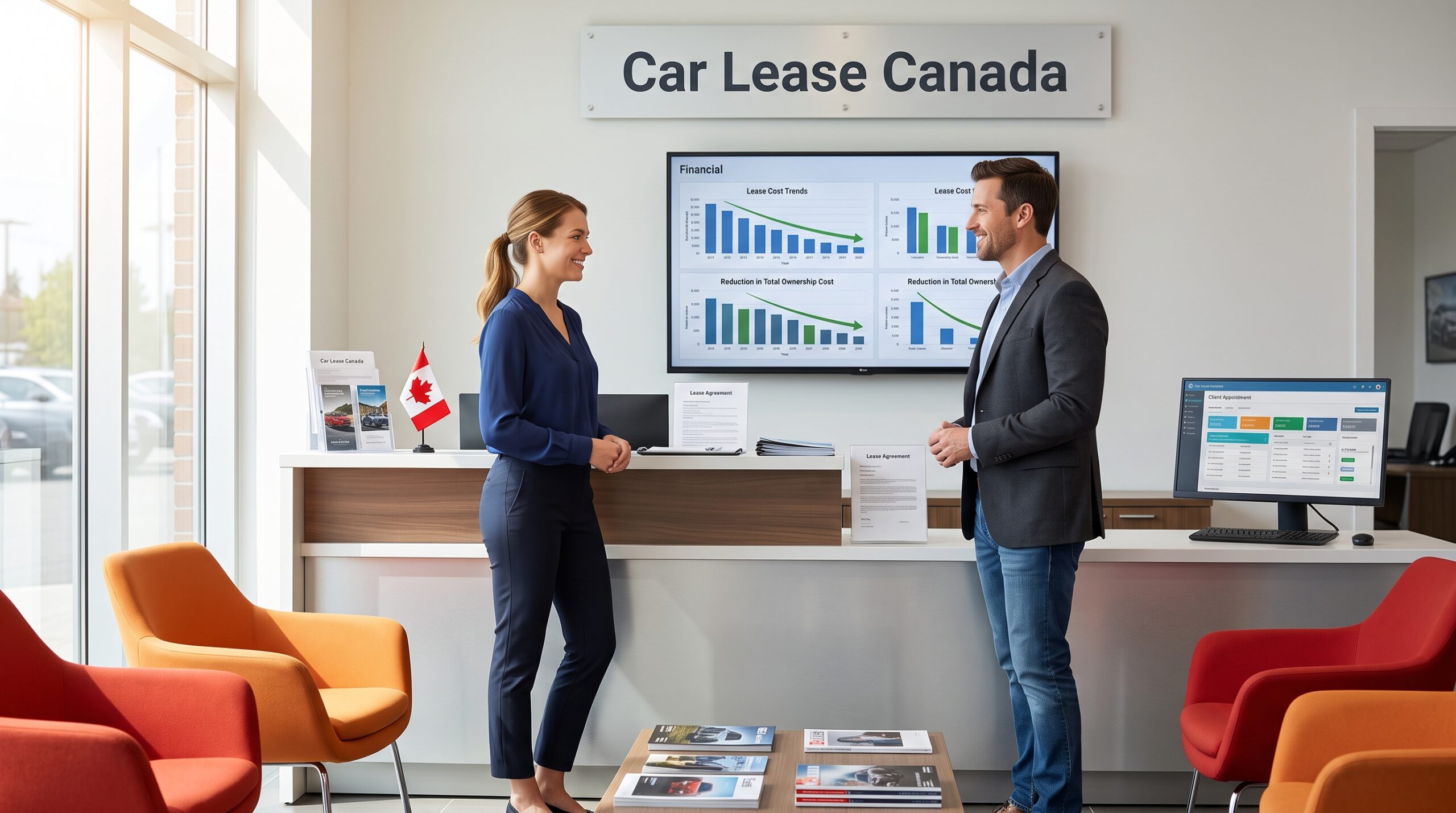
Leasing a car in Canada often comes with a sticker price that feels negotiable, but the real savings come from how you structure the deal, not just the monthly payment. Most people focus on the payment and miss the bigger levers: the residual value, the money factor (interest rate), and the acquisition fee. You can lower your lease costs by hundreds of dollars over the term without switching to a cheaper car, but only if you know where the numbers actually live.
Start With the Negotiated Price, Not the Monthly Payment
The single biggest mistake Canadian lessees make is walking into a dealership and asking for a specific monthly payment. That approach hands the dealer control over the term length, the down payment, and the interest rate — all of which they can adjust to hit your number while padding their profit. Instead, negotiate the capitalized cost (the vehicle’s sale price) first, just as you would if you were buying.
Dealers in Canada often quote the MSRP plus freight and PDI (pre-delivery inspection) as a fixed starting point. You can push back on the MSRP, but freight and PDI are typically non-negotiable. Your goal is to get the sale price as close to invoice as possible. A realistic target is 2–4% above dealer invoice for most mainstream brands, and invoice pricing is publicly available through sources like CarCost Canada or Unhaggle.
Why this matters: a $2,000 reduction in the negotiated price lowers your monthly payment by roughly $30–$35 on a 48-month lease, depending on the residual and interest rate. That’s over $1,500 in savings across the term, with zero impact on your driving experience.
Know the Residual Value Before You Walk In
The residual value is the car’s projected worth at the end of the lease, expressed as a percentage of MSRP. It’s set by the manufacturer’s finance arm, not the dealer, and it’s non-negotiable. But you can choose a vehicle with a higher residual. A car with a 62% residual over 48 months will cost you significantly less per month than one with a 55% residual, even if the MSRPs are identical.
Before you commit to a model, ask the dealership for the residual percentage on the exact trim and term you want. Japanese and German brands often hold higher residuals in Canada, while some domestic models depreciate faster. If you’re flexible on the brand, choosing a vehicle with a strong residual is the easiest way to lower costs without sacrificing equipment.
Reduce the Money Factor (Interest Rate)
In Canada, the lease interest rate is called the money factor, and it’s expressed as a decimal (for example, 0.00250). Multiply that by 2,400 to get the equivalent annual percentage rate — in that example, 6%. Many lessees never question this number, but it’s one of the few parts of the lease that you can actually influence.
Manufacturers often run subsidized rates on specific models, sometimes as low as 0.99% or 1.99% APR. These promotions are tied to the manufacturer’s finance arm, and they’re usually available for a limited time. If the dealer quotes a rate that seems high, ask directly if there’s a manufacturer-subsidized rate available on that model. If there isn’t, consider whether your credit score qualifies you for a better rate — anything below 700 in Canada will typically push the money factor up.
One practical step: get pre-approved for a lease through your bank or credit union before visiting the dealer. That gives you a baseline rate to compare against. If the dealer’s rate is higher, you have leverage. If it’s lower, take it. Either way, you’re not accepting whatever they write on the contract.
Cut the Fees That Inflate Your Monthly Cost
Lease contracts in Canada include several fees that most people never question. The acquisition fee (typically $500–$1,000) is charged by the finance company to set up the lease, and it’s often rolled into the monthly payment. You can sometimes negotiate this down or ask the dealer to absorb it as part of the deal.
Other fees to watch:
- Dealer administration fee — this is pure profit for the dealer. It ranges from $300 to $700 and is entirely negotiable. Ask for it to be removed before you sign.
- Security deposit — some leases require one, but it’s refundable. If you can pay it upfront, it doesn’t affect your monthly cost, but it also doesn’t earn you interest. Weigh that against your cash flow.
- Excess wear and tear waiver — this is an optional insurance product. It costs around $500–$1,000 and covers minor damage at lease end. It can be worth it if you have kids or park on the street, but it’s not mandatory. Decline it unless you know you’ll need it.
One fee you should never pay is a “lease documentation fee” that isn’t itemized. Canadian dealerships are required to be transparent about fees, but they don’t always volunteer the breakdown. Ask for a full itemized list of every charge before you negotiate the monthly payment.
Consider a Lease Takeover Instead of a New Lease
If you’re not set on a brand-new car, a lease takeover is one of the most effective ways to lower your costs in Canada. This is where you assume someone else’s existing lease, typically with a shorter remaining term and often with cash incentives. The person who wants out of their lease may offer a cash payment to make the deal attractive, which directly reduces your effective monthly cost.
You can find lease takeovers on platforms like Car Lease Canada, which specializes in connecting people who want out of their lease with those looking for a shorter-term commitment. The main advantage: you skip the acquisition fee, the freight and PDI, and the depreciation hit that happens in the first year. You’re also not locked into a 48-month term — many takeovers have 6 to 18 months left, which is ideal if you need a car temporarily.
The trade-off is that you don’t get to choose the exact configuration, and you need to have the original lessee’s approval to transfer the lease. Most manufacturers in Canada allow transfers for a fee (around $300–$500), which the new lessee typically pays. Factor that into your comparison, but even with the transfer fee, a takeover is often cheaper than a new lease on a similar vehicle.
Choose Your Term Length Carefully
In Canada, the most common lease terms are 36, 39, and 48 months. Shorter terms usually mean higher monthly payments but lower total cost, because you’re paying for less depreciation. Longer terms spread the cost out but expose you to more interest charges and a higher chance of being “upside down” if the car’s value drops faster than expected.
For most drivers, a 36-month lease is the sweet spot. It keeps you under the manufacturer’s basic warranty for the entire term, and you’re not paying interest on a car that’s losing value. If you need a lower payment, a 48-month term will reduce it by about 10–12%, but you’ll pay more in total interest and you’ll be out of warranty for the final year.
One rule to follow: never put a large down payment on a lease. In Canada, if the car is written off in an accident, your down payment is generally not refunded by the insurance company — it’s absorbed by the finance company. A $5,000 down payment on a lease is a risk with no upside. If you need to lower the monthly payment, negotiate a better price or accept a longer term instead.
Watch for End-of-Lease Costs
The lease payment is only half the story. At the end of the term, you’ll face a disposition fee (typically $300–$500) and potential charges for excess kilometers or wear and tear. In Canada, the standard allowance is 20,000 km per year, but you can negotiate a higher allowance at the start of the lease — usually for about $0.10–$0.15 per additional kilometer per year.
If you know you’ll drive more than the allowance, buy extra kilometers upfront. It’s much cheaper than paying the overage rate at the end, which can be $0.15–$0.25 per kilometer. For example, if you’re 5,000 km over on a 48-month lease, that’s a $1,200–$2,000 bill at the end. Buying the extra 5,000 km per year upfront might cost you an extra $20–$30 per month, which is roughly $1,000–$1,400 total — a clear savings.
Also, get the vehicle inspected by an independent mechanic about 60 days before the lease ends. If there’s damage that exceeds normal wear, you can get it repaired yourself at a cheaper shop rather than paying the dealer’s inflated end-of-lease rates.
FAQ
Can I negotiate the residual value on a lease in Canada?
No. The residual value is set by the manufacturer’s finance arm and is non-negotiable. However, you can choose a vehicle with a higher residual, which lowers your monthly cost.
Is it better to lease or take over a lease in Canada?
It depends on your situation. A new lease gives you a fresh warranty and full control over the configuration. A takeover is usually cheaper per month and requires no down payment, but you inherit the remaining term and any existing wear.
What is the average lease payment in Canada?
There’s no single average, but for a mainstream compact SUV, expect $350–$500 per month on a 36-month term with $0 down. Luxury vehicles run $600–$900. The exact number depends on the negotiated price, residual, and interest rate.
Lowering your lease costs in Canada comes down to negotiating the price, watching the interest rate, and avoiding unnecessary fees. Start with the numbers, not the payment, and you’ll keep more money in your pocket every month.
Visit Car Lease Canada














Post Comment